Dry Eye Syndrome - Mesa, Arizona.
(Keratoconjunctivitis Sicca)
Why Are My Eyes Dry?
Some people do not produce enough tears or the appropriate quality of tears to keep the eye healthy and comfortable. This is known as dry eye. Tears are produced by two different methods. One method produces
tears at a slow, steady rate and is responsible for normal eye
lubrication. The other method produces large quantities of tears
in response to eye irritation or emotions. Tears that lubricate are constantly produced by a healthy eye.
Excessive tearing occurs when the eye is irritated by a foreign
body, dryness or when a person cries.
What Are Symptoms of Dry Eye?
The usual symptoms include:
• stinging or burning eyes
• scratchiness
• stringy
mucus in or around the eyes
• excessive
eye irritation from smoke or wind
• excess
tearing
• difficulty wearing contact lenses
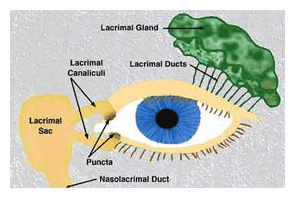
Excess tearing from "dry eye" sounds illogical, but if the tears responsible for maintenance lubrication do not keep the eye wet enough, the eye becomes irritated. When the eye is irritated, the lacrimal gland produces a large volume of tears that overwhelm the tear drainage system. These excess tears then overflow from your eye.
What Is Tear Film?
A film of tears, spread over the eye by a blink, gives the eye a glassy smooth optical surface. Without a healthy tear film, good vision is not possible.
|
|
|
|
|
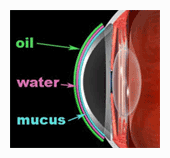
The tear film consists of three layers:
• oily layer
• watery layer
• layer of mucus
|
 |
The oily layer, produced by the eyelid's meibomian glands, forms the outermost surface of the tear film. Its main purpose is to smooth the tear surface and reduce evaporation of tears. |
|
|
|
The middle watery layer makes up most of what we ordinarily think of as tears. This layer, produced by the lacrimal gland, cleanses the eye and washes away foreign particles or irritants.
|
The inner layer of mucus is produced by the conjunctiva, the
paper-thin mucous membrane that covers the surface of the eyeball. Mucus allows
the watery layer to spread evenly over the surface of the eye and helps the
eye remain moist. Without mucus, tears would not stick to your eye.
What is Dry Eye?
Tear production normally decreases as we age. Although dry eye can occur in both men and women at any age, women are most often affected. This is especially true after menopause.
Dry eye also can be associated with other problems. For example, people with
dry eyes, dry mouth and arthritis are said to have Sjogren's syndrome.
A wide variety of common medications, prescriptions and over-the-counter
can cause dry eye by reducing tear secretion. Be sure to tell your ophthalmologist
the names of all the medications you are taking, especially if you are using:
• diuretics
• beta-blockers
• antihistamines
• sleeping
pills
• medications for "nerves"
• pain relievers
Since these medications are often necessary, the dry eye condition may have to be tolerated or treated with "artificial tears."
People with dry eye are often more prone to the toxic side effects of eye
medications, including artificial tears. For example, the preservatives in
certain eye drops and artificial tear preparations can irritate the eye. Special
preservative-free artificial tears may be required.
How Is Dry Eye Diagnosed?
Our doctors usually are able to diagnose
dry eye by examining the eyes. Sometimes tests that measure tear production
may be necessary. One such test, called the Schirmer tear test, involves placing
filter-paper strips under the lower eyelids to measure the rate of tear production
under various conditions. Another uses a diagnostic eye drop (fluorescein or
rose bengal) to look for certain patterns of dryness on the surface of the
eye.
How Is Dry Eye Treated?
-
Adding Tears
Eye drops called artificial tears are similar to your own tears. They lubricate
the eyes and help maintain moisture. Artificial tears are available
without a prescription. There are many brands on the market, so you may want
to try several to find the one you like best. You can use the tears as often
as necessary; once or twice a day or as often as several times an hour.
Preservative-free
eye drops are available if you are sensitive to the preservatives in artificial
tears. If you need to use artificial tears more than every two hours, preservative-free
brands may be better for you.
-
Conserving the Tears
Conserving your eyes' own
tears is another approach to keeping the eyes moist.
Tears drain
out of the eye through a small channel into the nose (which is why your nose
runs when you cry). Our doctors may close
these channels either temporarily or permanently. The closure conserves your
own tears and makes artificial tears last longer.
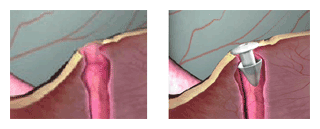 |
|
Tear drainage duct without silicone plug
|
|
Tear drainage duct
with silicone plug
|
-
Tear Plug Effect
A tear plug is in place in the lower eyelid drainage duct. Natural tears
are retained rather than drained away, allowing more natural lubrication for
the eye.

-
Other Methods
Tears evaporate like any other liquid. You can take steps to prevent evaporation.
In winter, when indoor heat is on, a humidifier or a pan of water on the radiator
adds moisture to dry air. Wrap-around glasses may reduce the drying effect of
the wind, but are illegal to wear while driving in some states.
Anything
that may cause dryness, such as an overly warm room, hair dryers or wind, should
be avoided by a person with dry eye. Smoking is especially bothersome.
Some
people with dry eye complain of "scratchy eyes" when they wake
up. This symptom can be treated by using an artificial tear ointment or thick
eye drops at bedtime. Use the smallest amount of ointment necessary for comfort,
since the ointment can cause your vision to blur.
Dry eye due
to a lack of vitamin A in the diet is rare in the United States but is more common
in poorer countries, especially among children. Ointments containing vitamin
A can help dry eye if it is caused by unusual conditions such as Stevens-Johnson
syndrome or pemphigoid. Vitamin A supplements do not seem to help people with
ordinary dry eye.
The eye specialists of East Valley Ophthalmology perform advanced
technology diagnostic testing and treatment, as well as taking
the time necessary to provide each patient with information needed
to fully understand their condition and to achieve their best possible
visual outcome.
If you would like further information, please call our office at:
480-981-6111
East Valley Ophthalmology
Eye Doctors - Mesa, ArizonaIf you or a family member
or friend have not had a recent routine eye examination, have a specific eye condition that needs addressing, or are looking for
an eye specialist or professional eye consultant please take a moment to Request an Appointment.
|